What the Marsh Edge Teaches
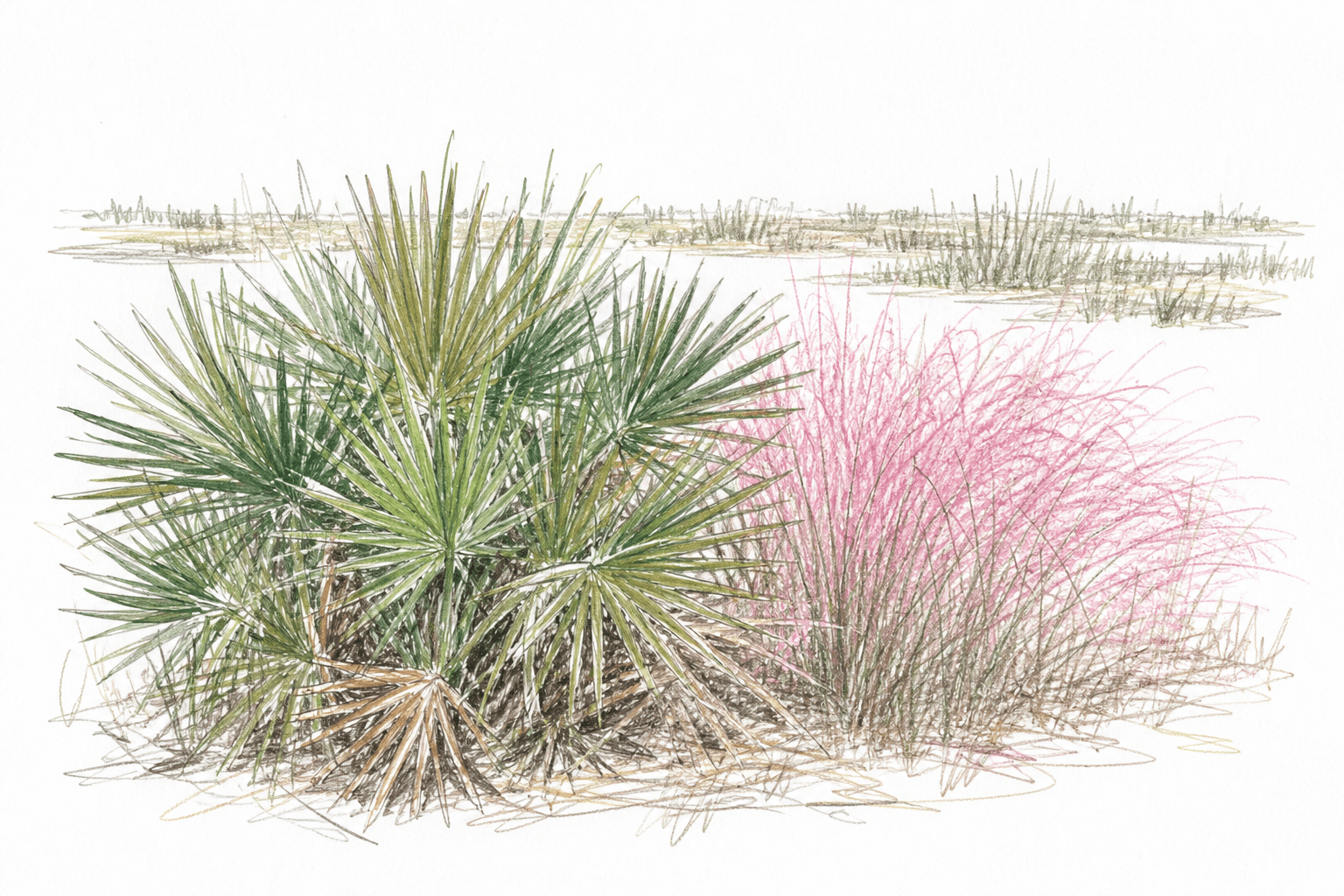
The south line of the property runs to the marsh of Sawpit Creek. Nothing down there was planted by anybody. The marsh decides what lives on that line, and it has been deciding for a long time.
Stand at the edge and the lesson is right in front of you. Salt wind off the Intracoastal. Full sun. Storm tides that put the whole line underwater and then walk away. The plants holding that ground are not lucky. They are specialists.
The Plants That Hold the Line
Saw palmetto (Serenoa repens) anchors the high side. Salt, drought, cold, even fire. It shrugs at all of it, which is why a single palmetto clump can be centuries old.
Yaupon holly (Ilex vomitoria) grows wild along these edges too. The same species that shears into a tidy foundation shrub takes salt spray that would kill a boxwood in a season.
And muhly grass (Muhlenbergia capillaris) takes the brightest, saltiest corner and answers every October with a haze of pink.
What It Means Inland
The reason this matters fifteen minutes inland is simple. A plant that can hold a marsh edge does not need much from you in a subdivision. No sprinkler schedule. No spray program. Coastal toughness reads as low maintenance the moment you move it to an easier yard.
The marsh runs that durability test every day.
We pay attention to the results.